If you are searching for a Xuzhou construction machinery supplier, the first question is not which model to buy. It is who is actually selling it to you. Xuzhou is a real machinery town, with excavator, wheel loader, crane and parts production and a large used equipment trade. That also makes it easy for traders, export agents and resellers of rebuilt machines to present themselves as factories.
I work in B2B export of industrial electric motors and deal with Chinese factories daily. When a buyer asks me to look at a machinery seller, I run the same checks every time, and I run them before money moves. Below is what I look at, in the order I look at it.
Start with the registration, not the website

Every legally registered Chinese company has an entry in the national enterprise credit system (国家企业信用信息公示系统). The entry shows the legal name, unified social credit code, registered address, legal representative, business scope, and the number of people covered by social insurance. That last figure is the one I trust most, because it is hard to fake and it tells you roughly how big the operation really is.
In a recent round of checks on 9 machinery suppliers in Shandong, 3 turned out not to be factories at all. One had a business scope in wholesale trade and only 2 people on social insurance. One had 0 people insured and no customs registration, and the footer of its website carried the name of a different company from the same village. The third was the export arm of a factory owned by the same boss, which is not fraud, but it does mean you are not talking to the factory.
For Xuzhou, read the registration with these questions in mind:
Business scope. If it lists only sales, leasing and import/export, and nothing about manufacturing, assembly or processing, treat the seller as a trader until proven otherwise. A real manufacturer usually has production or processing wording in the scope.
Social insurance headcount. A factory that builds excavators or loaders needs welders, fitters, painters, QC and office staff. A number in the single digits does not match that story. Compare the number with the size of the workshop the seller claims to have.
Registered address. Check whether it matches the address on the quotation, the website and the invoice. A mismatch is a question, not automatically a problem, but it needs an answer.
Customs registration. If the seller claims to export directly, it should have its own customs registration. If it does not, someone else is handling the export, and you should know who.
Court records and abnormal operation listings. Contract disputes, unpaid judgments or a listing for failing to publish annual reports are worth reading before you commit.
If you want this done properly rather than by yourself at midnight, the China supplier verification service covers registration and court records, a factory or trading company check, a live video walk-through and the decision-maker's contact, and you can see the format in the sample supplier verification report. For the general method, my guide on how to verify a Chinese supplier walks through 12 checks.
Brand names and trademarks: the risk buyers underestimate
One wheel loader supplier I checked in Shandong used a trademark very close to a major brand that has proper sales and service in the buyer's own country. The online product titles also carried the big brand's name. That combination is dangerous. Goods can be held at customs, and the buyer can end up on the receiving end of an infringement claim, in a market where the real brand has lawyers and local distributors with an interest in enforcing it.
Before you accept a machine with a familiar-looking logo, do three things:
Ask for the trademark registration certificate and check that the registered owner is the company you are paying, and that the class covers construction machinery.
Search the brand name plus the words trademark and registration in the seller's country and in your own. Look for opposition or dispute records.
Compare the logo, colors and model naming with the original brand. If the resemblance is deliberate, walk away. A cheap loader is not cheap if it is seized.
Also ask the seller to confirm in writing that the machine and its branding do not infringe third party rights, and that it will indemnify you. A seller who will not put that in writing is telling you something.
New machine or rebuilt machine
Xuzhou has a large trade in used and rebuilt construction machinery, and some sellers present a rebuilt unit as new. The machine may work fine, but the price and the paperwork should match what it actually is. Check the following on photos, video and, ideally, in person:
Hour meter. Low hours on an old-looking machine is a warning. Ask for photos of the meter and the surrounding panel.
Paint. Fresh paint over everything, including hoses, bolts and the bucket edge, often hides a repaint. Original paint has wear in the places that wear first.
Welding. Look at boom, arm and chassis repairs. Factory welds are uniform; repair welds are not.
Nameplate and numbers. The nameplate, the whole-machine serial number and the engine number should agree with each other and with the documents. Photograph all three.
Documents. Ask whether the machine is being sold as new or used, and make sure the invoice and the export documents say the same thing as the listing.
If the seller cannot or will not send clear photos of the nameplate and serial number, stop there.
Run the machine before you pay the balance
For excavators and loaders, a video call is not enough. Someone needs to start the machine, warm it up and work every function while you watch, or a third party watches for you. My test list:
Travel forward and back, and check that the machine runs straight.
Swing left and right through the full range, and listen for noise or play.
Boom, arm and bucket through full stroke, slowly and at speed.
Hydraulic leaks at cylinders, hoses, fittings and under the machine.
Engine start from cold, smoke color, oil pressure and any warning lights.
Play in pins and bushings, and the condition of the undercarriage.
This is where a pre-shipment inspection earns its money. A man-day on site, with the machine running and the numbers photographed, is far cheaper than a container of problems. If the seller resists a pre-shipment check, that is your answer.
Factory or trading company: does it matter?
Not always. A good trading company with deep factory relationships can be a better partner than a small factory with no export experience. What matters is that you know which one you are dealing with, because it changes who is responsible when something goes wrong, who holds the warranty, and who you can actually chase.
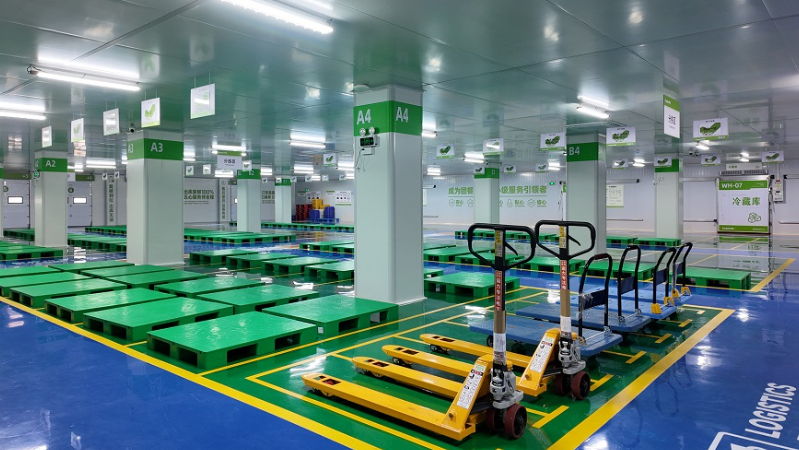
If the seller claims to be a factory, ask for a live video walk-through of the workshop, not a photo gallery. Show me the production line, the paint shop, the parts store and the QC area, and pan the camera around so I can see the whole space. A real factory can usually do this on the spot. A seller who keeps finding excuses is telling you something. The on-site factory audit goes further, with a physical visit and a written report, and my write-up of the 9 Shandong machinery suppliers we checked shows how often the claim does not hold.
Payment terms that protect you
My rule for machinery from a supplier you have not bought from before: keep the deposit at or below 30 percent, and pay the balance only after inspection. For larger machines, split the balance so that a final payment is released after loading or against the bill of lading. Pay the deposit to the company named on the registration and the contract, not to a personal account and not to a third party. If the bank details change by email, call the decision-maker on a number you already had and confirm.
Ask for the contract to name the machine by serial number, state whether it is new or used, list the included attachments, and set out the warranty terms and the inspection standard. Vague contracts are how disputes start.
When to ask me to check
If you are close to sending a deposit to a Xuzhou supplier you found online, and you cannot match the business scope, the insured headcount and the workshop story to each other, that is the moment to have someone local look. A verification costs US$79 per supplier and comes back in 3 to 5 business days, which is a small price against an excavator or loader you cannot use. If you already have a shortlist, send it over and I will tell you which ones need a closer look.
Get a Quote on WhatsApp See Supplier Verification
LocalAuditChina is an independent verification service, not a certification body. Reports are findings to support your purchasing decision.