In October 2026 a buyer in South America asked me to check 9 suppliers in Shandong before ordering excavators, wheel loaders, backhoe loaders, tractors and a forklift. His one rule: buy direct from the factory. After the first stage of checks, 3 of the 9 turned out not to be the factory at all.
This is a real case. I have removed the company names and anything that would identify the buyer, but every finding below comes from the official records I checked: the national company register and annual reports, court records, customs registrations and government licenses. This first stage was done entirely from records. Live video calls with each factory are the next stage.
The 9 suppliers side by side
| Supplier | Product | Who actually makes it | Staff with social insurance | Exports directly | Risk | My recommendation |
|---|---|---|---|---|---|---|
| A (Jining) | Excavators | Own factory | 143 | Since 2016 | Low | Start here. Sign and pay the parent company, not its subsidiary |
| B (Jining) | Tractors | Own factory | 555 | Since 2017 | Medium | Only with strict payment terms |
| C (Qingzhou) | Wheel loaders | Not confirmed | 6 | Since 2024 | Medium-high | Not recommended for now |
| D (Qingzhou) | Backhoe loaders | Trading company | 2 | Since 2017 | Medium | Does not meet the "direct from factory" rule |
| E (Weifang) | Tractors | Own factory | 45 | Since 2023 | Low-medium | Start here. Warranty and spare parts in writing |
| F (Laizhou) | Mini loaders | A different company with different owners | 0 (real factory: 50) | No (real factory: since 2012) | Medium | Sign and pay the real factory |
| G (Qingdao office) | Backhoe loaders | A sister factory with the same owners | 8 (factory: 43) | Since 2022 (factory: no) | Low-medium | Start here. Pay the exporter, factory co-signs the contract |
| H (Laizhou) | Wheel loaders | Own factory | 240 | Since 2012 | Low-medium | Start here. Ask for current ISO certificates |
| I (Pingdu) | Forklifts | Own small factory | 20 | Since 2019 | Medium | Only after a valid manufacturing license is shown |
Staff numbers are people with social insurance in the latest annual report. The real headcount is usually higher, but the figure is good for comparing size.
Lesson 1: three "factories" were not factories
The buyer had been talking to all 9 as if they were manufacturers. The records told a different story for three of them, and each one hid it in a different way.
Supplier D: a trading company with its own brand
Its registered industry is wholesale, it has 2 insured employees and its paid-in capital is about RMB 121,000. It sells under its own export brand and has exported since 2017 without a single lawsuit, so it is a real business. It just doesn't make machines. One of the loaders it offered carried a brand that belongs to a large international manufacturer, and it could not show that it was an authorized dealer.
Supplier F: a brand name with nobody behind it
F had 0 insured employees and no customs registration, which means it cannot even export under its own name. The giveaway was its website: the company name in the footer was a different company in the same village. That second company is the real factory. It was founded in 2009, has 50 insured staff, has exported since 2012 and its court cases are mostly it suing dealers for unpaid machines, which is what a working factory looks like. The two companies have no shareholders in common. If the buyer had paid F and something went wrong, there would be nobody to hold responsible.
Supplier G: an export office for a family factory
G is registered in an office tower in Qingdao with 8 insured staff. Its business license lists manufacturing, but only "through branches", and its only branch had already been deregistered. Production happens at a factory in Laizhou owned by the same two people, with 43 insured staff and no customs registration of its own, so it exports through G. This setup is common and not a problem in itself. The fix is in the contract: pay G, because G is the exporter on the invoice and bill of lading, and have the factory sign as the manufacturer responsible for quality and warranty.
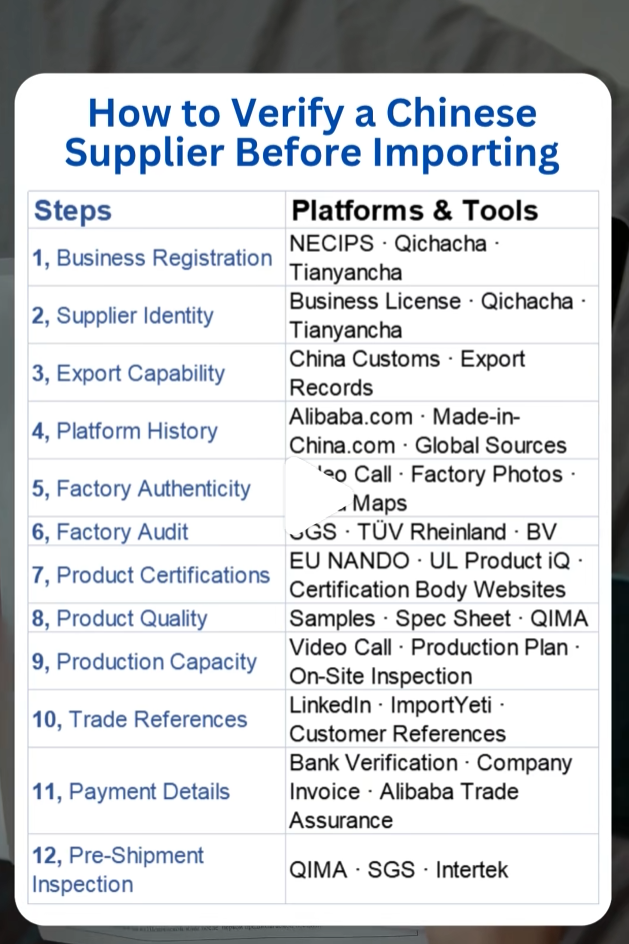
The signs to look for are the same each time. I explain each one in how to verify a Chinese supplier:
A business scope or registered industry that only covers sales or wholesale
Very few insured employees for a company that claims to build heavy machinery
No customs registration, so the company cannot export in its own name
A website, phone number or address that belongs to another company
Lesson 2: a big factory can still be a payment risk
Supplier B was the largest of the nine, with 555 insured staff, in business since 2011 and with its capital fully paid in. On size alone it looked like the safest choice. The court records said otherwise: 32 judgments, including 8 product liability cases and 10 sales contract disputes. Its land and equipment were mortgaged, and in 2025 its investors left and the company reduced its capital.
None of this means B is a fraud. It means the buyer should not send a large deposit. My recommendation was a deposit of no more than 30%, with the balance paid only after an inspection or through a letter of credit, and the warranty and spare parts written into the contract.
Lesson 3: check the license, not just the factory
In China, forklifts are "special equipment", and a factory needs a government manufacturing license to build them. Licenses have a number starting with TS and an expiry date, and you can look them up.
Supplier I is a genuine small forklift maker with its own trademark and 15 patents. Its manufacturing license expired in March 2025 and no renewal had been registered. Its ISO 9001 certificate had also expired.
Supplier H, a loader factory that also makes forklifts, had a forklift license that expired in October 2026, and its ISO certificates had lapsed in 2023.
For H this didn't matter, because the buyer wanted loaders. For I it was a deal breaker until it could show a valid license that checks out on the official portal. When you ask for it, present it as a routine requirement. There is no need to tell the supplier what you already found.
Lesson 4: a lookalike trademark can stop your shipment
Supplier C was founded in 2022 and has 6 insured employees. Its trademarks closely resembled a well-known Chinese loader brand that is sold officially in the buyer's country, and its online listings used famous brand names in their titles. A machine carrying a lookalike mark can be held at customs or lead to an infringement claim after import. Together with the small size and frequent changes of shareholders and business scope in 2025, that was enough for me to recommend not going ahead. The buyer can reconsider only if a video call shows its own production line and the machine comes with no confusing marks.
Lesson 5: the brand on the machine is not always the company that supports it
Supplier E builds tractors under an old state-owned tractor brand. The brand use is legitimate: the original brand owner holds 51% of the company. But that brand owner is now very small, with 18 insured staff and 139 court cases. In practice, warranty and spare parts will come from E's factory in Weifang, not from the famous name. So the contract and payment should go to E itself, with warranty terms and parts supply in writing.
Lesson 6: websites exaggerate, the register doesn't
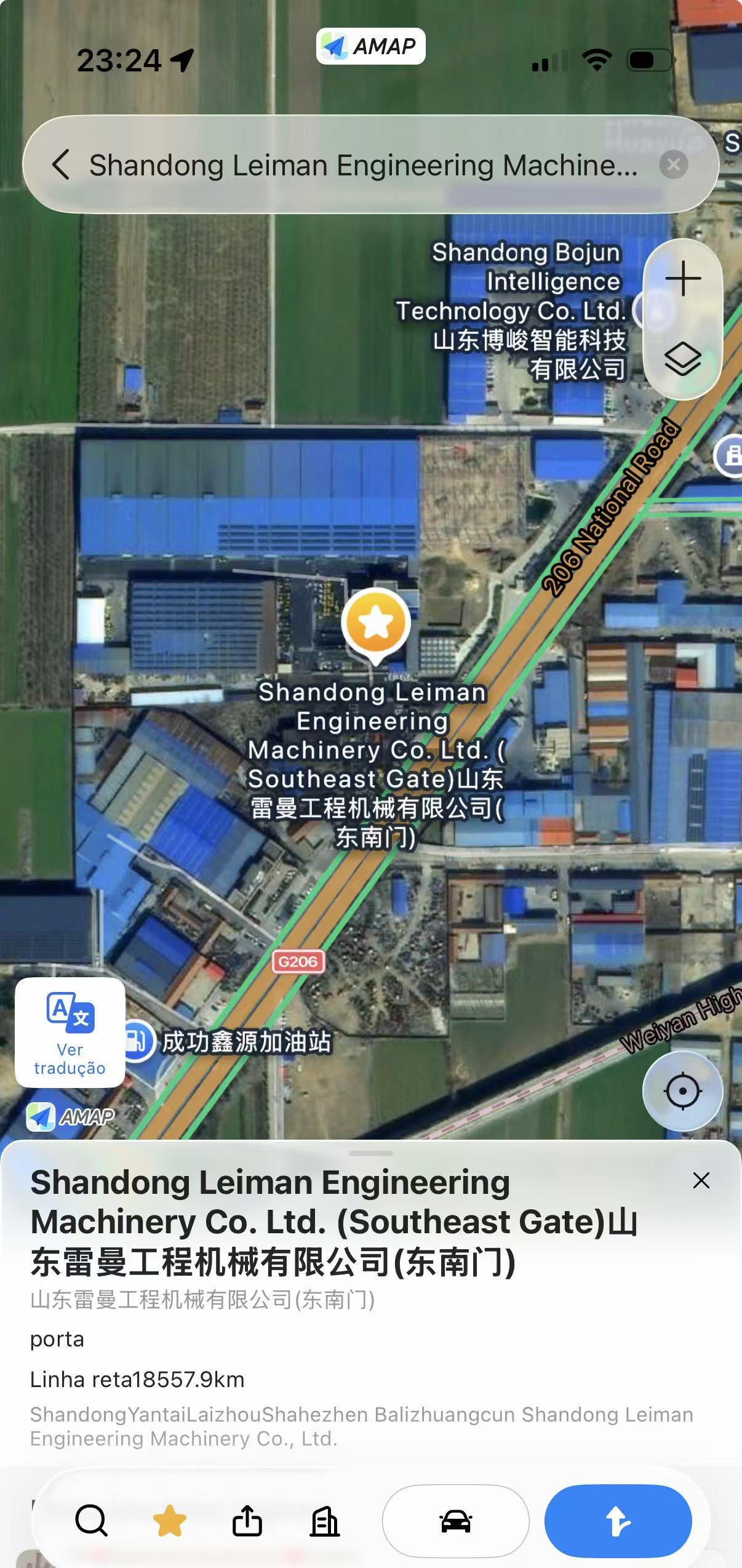
Two of the better suppliers made claims on their websites that the records did not support. One described a factory of "more than 100 hectares", while the satellite view shows a much smaller site inside an industrial park; that is on the list for the video call. Another claimed a capacity of 100,000 machines a year with 240 insured staff. Neither claim made them bad suppliers. It just shows why I base my reports on registry data and video, not on company websites.
The payment rules I gave the buyer
These apply to all 9 suppliers, and to almost any purchase from China:
One company only: the company that signs the contract must be the one on the commercial invoice, the exporter on the bill of lading and the holder of the bank account.
Pay only a company account. Never a personal account or a "partner company".
If you receive a message saying the bank account has changed, stop. Confirm on a video call with someone you already know before paying. This is the most common scam.
A deposit of 30% at most. Pay the balance against a copy of the bill of lading, or for medium-risk suppliers only after inspection or through a letter of credit.
Put everything in writing: engine, axle and hydraulic brands and models, warranty, and the price and lead time of spare parts.
What records can't tell you
Records show who a company is, who owns it and how it behaves in court and with the government. They do not show whether the welding line is running today or whether every model they quote is really built on site. That is why the second stage of this job is a live video walk-through with each supplier and the direct contact of the owner or general manager. It is also why a remote check is not the same as standing in the factory. For a large order, an on-site factory audit and a pre-shipment inspection close the remaining gaps.
If you are comparing several Chinese suppliers right now, the cheapest point to find these problems is before the deposit. You can see what a verification report looks like, or send me your list.
Get a Quote on WhatsApp See Supplier Verification
Company names and buyer details have been removed. LocalAuditChina is an independent verification service, not a certification body. Reports are findings to support your purchasing decision.