Shenzhen is one of the main places where consumer electronics, LED lighting, batteries and PCB assemblies are sold to overseas buyers. It is also a place where the gap between what a supplier shows you and what actually happens can be wide. If you are trying to verify an electronics supplier in Shenzhen, the first thing to accept is that the company you are talking to may not make anything at all.
A large number of electronics suppliers here are trading companies or sales offices, many of them around Huaqiangbei. The actual production often sits in factories in Dongguan or Huizhou, and sometimes the work is subcontracted again, one or two layers down. That is not automatically bad. A good trading company can manage quality and logistics well. But you need to know which one you are paying, because it changes what you should check and what protection you have when something goes wrong.
Below is the sequence I would use to check a Shenzhen electronics supplier. It works for LED lighting, PCB assembly, battery packs and consumer electronics, because the failure points are similar.
Start with the registration, not the website
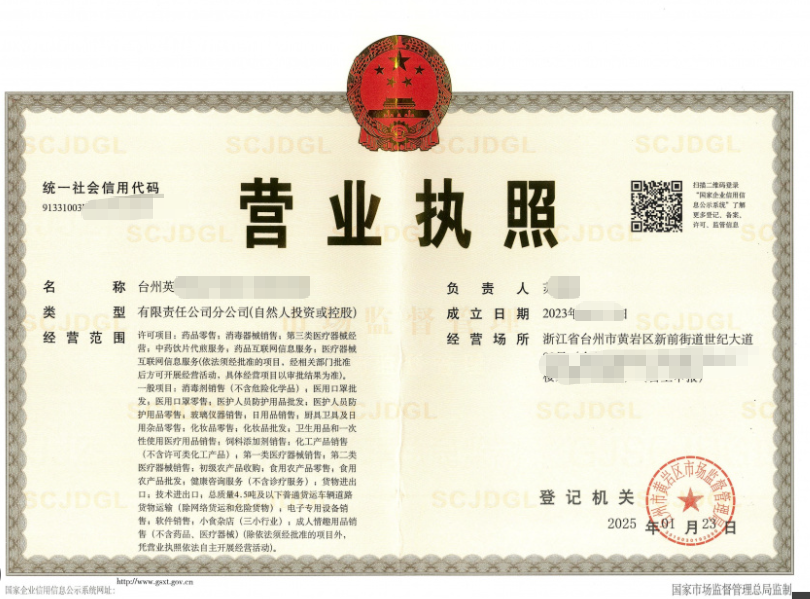
Every legally registered company in China has a business license, and the basic registration details are public. Pull them before you spend time on technical questions.
Business scope (经营范围): Does it include manufacturing, or only sales, import and export, and technology development? A scope that says sales and trade only tells you this is not the producer, whatever the website says.
Registered address: Is it a desk in an office tower, or a building inside an industrial park? An office address does not prove fraud, but it does mean the factory is somewhere else. Check the address on a map before the video call.
Number of insured employees (参保人数): This is the count of staff the company actually pays social insurance for. A supplier claiming a large factory with a handful of insured staff is either a sales office or is under-reporting. Either way, ask.
Established date and status: A company registered a few months ago with a long history on its website deserves questions. So does one listed as abnormal in the register.
If the registration shows a trading company, ask directly who manufactures and whether you can visit that factory. If the answer is vague, treat the quote as coming from an intermediary.
Use the video walk-through properly
Most suppliers will happily send photos of a sample room. That proves nothing. When I do a live video walk-through, I ask for specific things, in real time, with the camera moving:
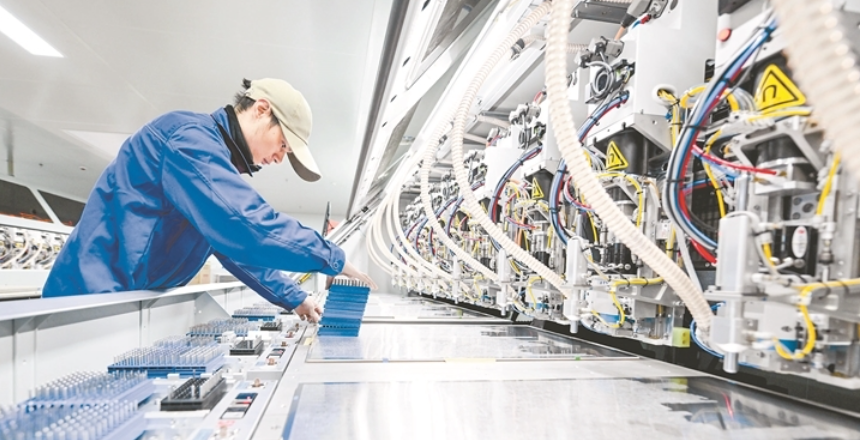
The SMT line running. Ask to see the pick-and-place machines in operation, the reflow oven, and the boards coming off. A stopped line with no boards on it is not evidence. If they say the line is down today, ask when it runs and call back then.
Assembly stations with people working. Look at how the boards are handled, whether there is ESD protection, and how components are stored.
Test stations. Functional test, burn-in, and for LED products an integrating sphere or at least a working photometric setup. Ask what happens to units that fail.
The warehouse and incoming materials. Reels of components, battery cells, housings. Ask where the cells come from.
Then ask the question that separates factories from resellers: which parts do you make in house and which do you buy? For most Shenzhen electronics suppliers, the honest answer is that PCB fabrication, housings, batteries and sometimes the whole assembly are bought in. That is normal. What matters is whether they know their sub-suppliers and can show you the incoming inspection records.
If you cannot get a live walk-through, or the camera never leaves one room, that is your answer. A proper on-site factory audit settles it, because someone stands on the floor and follows the process from incoming goods to packing.
Check certificates by number, not by PDF
Certificates are the easiest thing to fake in this industry. A polished PDF of a CE or UL certificate means nothing on its own. What you do is take the certificate number and the issuing body, go to that body's website, and look the certificate up yourself.
CE: for most electronics, CE is a self-declaration supported by test reports from a lab. Ask for the test report and the lab that issued it, then confirm the report number with the lab.
FCC: check the FCC ID in the public database. The grantee name must match the company you are dealing with, and the product description must match what you are buying.
UL or ETL: look up the file number in the certification body's online directory. Check the company name and the product category.
In every case, three things must line up: the certificate number, the company name on the certificate, and the product model you are ordering. A valid certificate for a different product, or held by a different company, does not cover your order. If the name on the certificate is a factory you have never heard of, ask what the relationship is.
For lithium battery products there are two more documents you must have: a UN38.3 test report and an MSDS. Without them the goods cannot legally fly, and carriers will usually refuse them. Do not accept a summary sheet; ask for the full report and check that the cell or pack model matches what you are buying.
Product checks that depend on what you are buying
Registration and certificates tell you who you are dealing with. They do not tell you whether the product matches the quote. For electronics, a few product specific checks catch most of the expensive surprises.
LED lighting
Lumen and efficacy claims: ask for a photometric test report (an LM-79 style report or an integrating sphere result) for the exact model, not a family datasheet. Compare the measured lumens and watts with what the quote promises.
Driver: ask which driver is used, whether it is isolated or non-isolated, and who makes it. The driver is often the part that fails first, and a cheaper substitute is easy to slip into a later batch.
CRI and color temperature: write the values and tolerances into the purchase order, so a pre-shipment check has something to measure against.
Battery packs and battery powered products
Cell source and grade: ask which brand of cell is used and whether it is grade A new stock. Recycled or downgraded cells are a known risk in low priced packs.
Real capacity: a capacity test on a few random units (full charge, then discharge at a stated current) shows whether the mAh printed on the label is real.
Protection board: confirm the pack has a protection circuit for overcharge, over discharge and short circuit, and that it is in the photos of your production units, not only the sample.
PCB assembly and consumer electronics
Approved sample: keep a signed and sealed sample (often called a golden sample) on both sides. Every later shipment is compared with it, so a quiet component change shows up.
Bill of materials: for key parts, put the brand or approved alternatives in the contract. Without that, the factory may substitute whatever is cheapest that week.
Testing records: ask whether boards go through AOI after SMT and a functional test before assembly, and ask to see the failure records for a recent batch.
Packaging: boards and finished products should be packed with ESD protection where needed, and cartons should pass a drop test for your shipping route.
None of these checks needs a lab of your own. They need the requirement written down before production, and someone to compare the goods against it before you pay the balance.
Match the payment to the contract
Pay only to the corporate account (对公账户) of the company named on the contract. The account name must match the business license exactly. If someone asks you to pay a personal account, a Hong Kong account with a different company name, or a third party's account, stop and ask why. This is a common way buyers lose money, and it is entirely avoidable.
A few simple rules keep the payment side safe:
Keep the deposit to 30% at most.
Pay the balance only after a pre-shipment inspection, or against a copy of the bill of lading.
If the supplier emails new bank details, do not pay until you have confirmed the change on a video call with someone you already know at the company. Email account takeovers that swap bank details are a real risk in international trade.
Also confirm who signs the contract and who has authority to agree to changes. The person you chat with daily may be a salesperson with no authority over quality claims.
What a verification report should tell you
When I run a China supplier verification, the report covers the official registration and court records, whether the entity is a factory or a trading company, a live video walk-through, and the decision-maker's contact details. That last point matters more than it sounds: knowing who actually owns the decisions is what lets you escalate when a shipment is wrong.
The court records check is worth explaining. Chinese courts publish judgments and enforcement records, and a company with unpaid judgments or a history of enforcement actions is a different risk from a clean one. This is public information, but it is hard to read from outside China without help. You can see the format in the sample supplier verification report.
A short checklist before you send a deposit
| Check | What good looks like |
|---|---|
| Business scope | Includes manufacturing, or the trading role is openly stated |
| Registered address | Industrial park or factory building, consistent with the story |
| Insured employees | Consistent with the size claimed |
| Video walk-through | SMT line running, assembly and test stations shown live |
| Make or buy | Clear answer on PCB, housing and battery sourcing |
| CE, FCC, UL | Number checked on the issuer's site, name and model match |
| Battery documents | Full UN38.3 report and MSDS for the exact model |
| Payment | Corporate account matching the contract company |
For a broader set of checks that apply to any Chinese supplier, not just electronics, see how to verify a Chinese supplier: 12 checks before you pay. The factory versus trading company question comes up in every industry, and the Qingdao guide on factory or trading company walks through it in detail.
Where buyers get caught
A pattern to watch for is a well-presented sales office, a sample that is genuinely good, and a first order that ships fine. The problems appear on the second or third order, when the subcontracted factory changes a component, or when the certificate on file turns out to belong to a different product. By then the deposit is paid and the leverage is gone.
The cost of checking is small compared with that. A verification report is US$79 per supplier, or US$60 each for five or more, and takes three to five business days. If you want someone on the floor before production starts, an on-site audit starts from US$299 per factory plus travel at cost. Before the goods ship, a pre-shipment inspection starts from US$299 per man-day plus travel at cost. I am paid by buyers only and never take commission from factories, so the report tells you what I found, not what the factory wants you to hear.
One note on timing: Chinese New Year and the weeks around it disrupt staffing and shipping across China. If your order falls near it, plan the checks earlier than you think you need to.
Ask me to check the supplier when the order value is more than you can comfortably lose, when the company turns out to be a trading office rather than a factory, when the certificates cannot be verified by number, or when payment details do not match the contract. Those are the moments when a few days and a small fee change the decision.
Get a Quote on WhatsApp See Supplier Verification
LocalAuditChina is an independent verification service, not a certification body. Reports are findings to support your purchasing decision.